
Why We Built Expense AI
Our first app tried to read your bank. This one reads your receipts.

For most of my adult life, I couldn’t answer a simple question: where did my money actually go?
Not roughly. Exactly. I could open my banking app and see that I was a few thousand Naira lighter than yesterday, but the why was always fuzzy. A string of cryptic transaction descriptions. A balance that dropped faster than I expected. The vague, low-grade guilt of knowing I was spending without ever really seeing it.
Hey Siri, play Money by M.I Abaga. It’s the song that captures that feeling perfectly.
I don’t think I’m unusual. Almost everyone I know carries some version of that question around. It’s the question that’s quietly driven everything my co-founder, Precious Arikeri, and I have built for the last few years: first down a path that didn’t work, and then down one that did.
This is the story of how we got from there to Expense AI. I figure the best way to introduce what we’re building is to be honest about what came before it.
The first attempt: Trackfundx
Our first real swing at this was an app called Trackfundx.
The idea was the obvious one, the one almost every personal finance app reaches for. If you want to know where someone’s money goes, connect their bank accounts, pull in the transactions automatically, sort them into categories, and hand them a tidy picture of their financial life. Set a budget. Get a reminder before the subscription you always forget renews. Watch your spending organize itself.
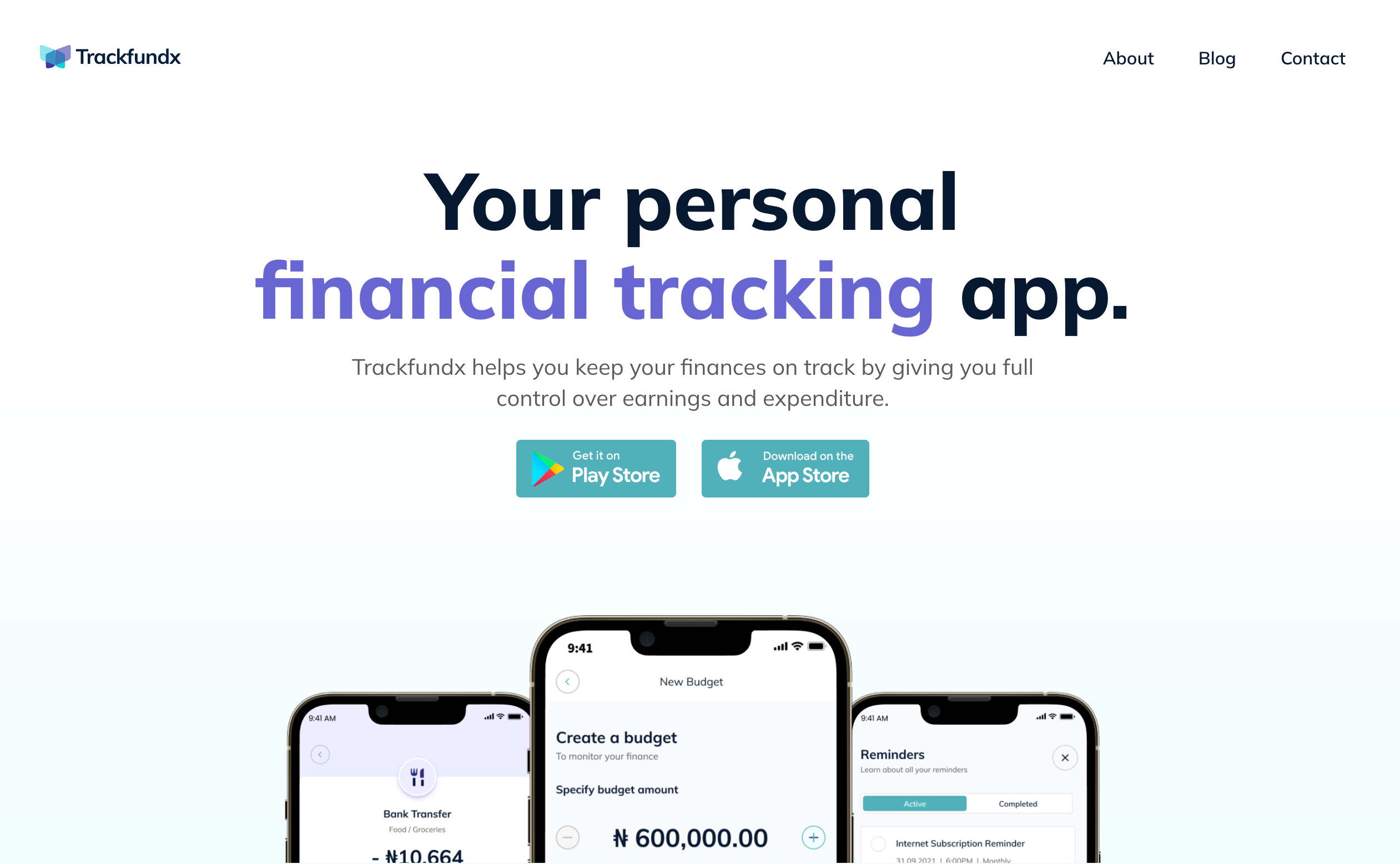
We built all of it. You could link your bank accounts (we supported dozens of banks across Nigeria), and Trackfundx would categorize your spending, draw your reports, and help you budget. On paper, it did everything a money app is supposed to do.
People signed up. It worked.
Until it didn’t.
Where bank data broke down
The cracks showed up in real use, and once I saw them, I couldn’t unsee them. There were three, and together they were fatal.
The data was unreliable: We depended on a bank-connection partner to feed us transactions, and what came through was often wrong: duplicated entries, missing ones, numbers that didn’t reconcile. Worse, the connections kept breaking. A bank would demand re-authentication, the automation would silently stall, and the user’s “automatic” tracker would quietly go stale without anyone noticing. The whole promise was that you didn’t have to think about it. But you did have to think about it, constantly, just to keep it running.
The bank statement doesn’t actually tell you anything: This was the deeper problem. A bank transaction gives you three things: a narration, a date, and an amount. And the narration is almost always useless: a merchant code, an abbreviation, a reference number that means nothing to a human being. We tried hard to classify transactions from that thin signal, and we kept failing. So much money ended up dumped into a category called “Other” that the reports became meaningless. A pie chart that’s mostly “Other” doesn’t answer where did my money go? It just restates the question.
We were trapped in one country: Because our whole model rested on bank connections, our reach was capped by which banks we could integrate and the compliance we could clear to do it. The infrastructure that would have unlocked more of the world, the Plaid-style aggregators, sits behind compliance requirements that a small, self-funded team in Nigeria simply could not meet. And even if we had, we’d only have inherited their coverage map. We could serve Nigerians, and that was it.
So there we were: unreliable data, statements that couldn’t tell a story, and a ceiling on who we could ever help. We’d built the obvious thing, and the obvious thing was broken at the foundation.
The insight: the receipt tells the truth
The turning point was realizing we’d been looking at the wrong document the whole time.
A bank statement gives you a number. A receipt gives you the story.
Think about what’s actually printed on the receipt or invoice sitting crumpled in your bag. The merchant. The exact time. The location. Every line item is broken down. The tax. Sometimes, even the name of the cashier who served you. That single slip of paper contains more truth about where your money went than your bank will ever send us, because it was created at the moment money changed hands, by the person you handed it to.
We had been trying to reverse-engineer your spending from the bank’s shorthand. The real story was already in your hand. We just had to read it.
That reframe became Expense AI.
So we built Expense AI
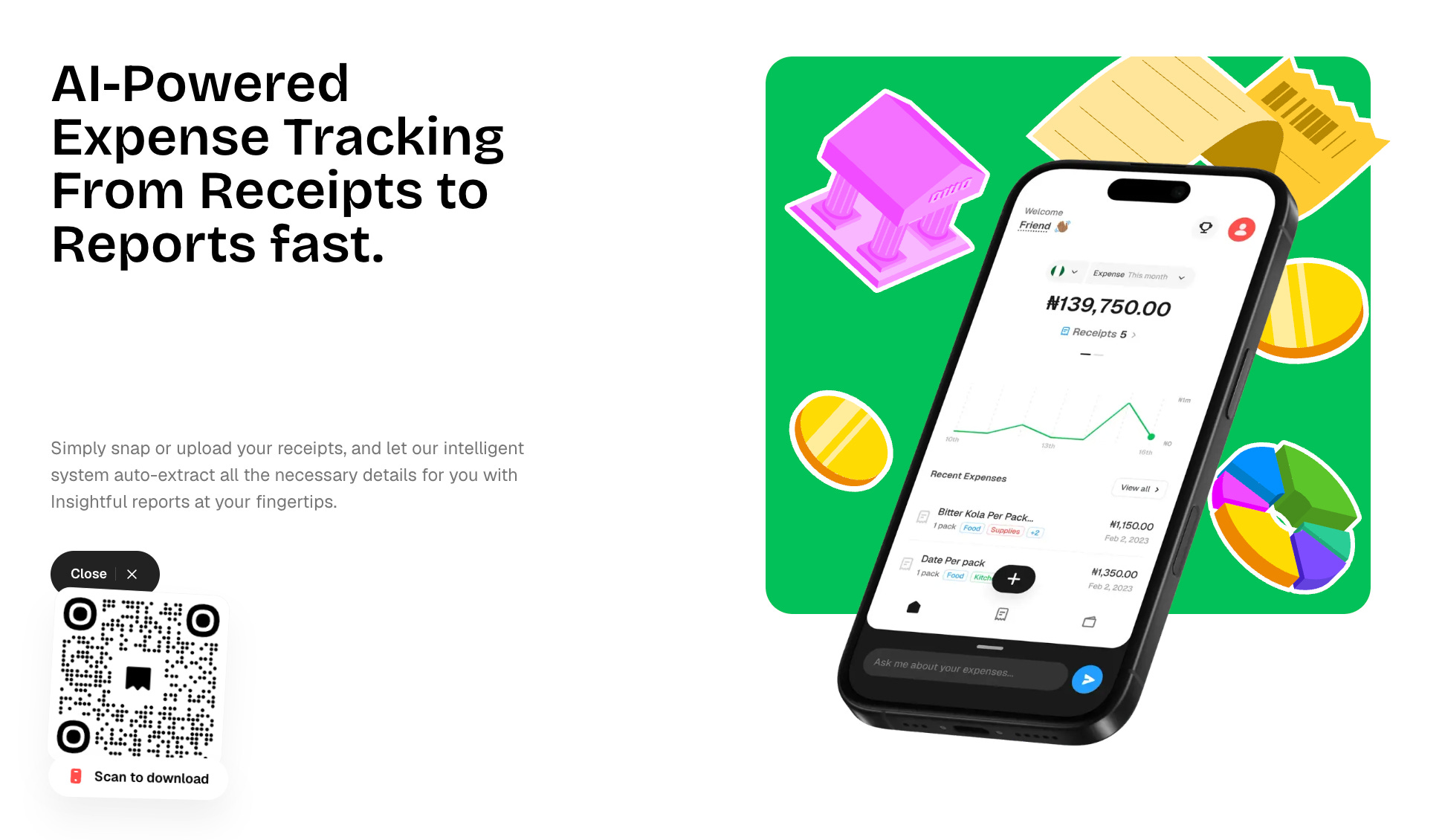
Here’s the whole thing in a sentence: point your camera at a receipt, or forward us a receipt email, and Expense AI reads it the way a person would, pulling out the merchant, the total, the date, the line items, the tax, and files it for you in seconds. No typing. No picking from a dropdown. No “Other.”


I just described that flow in a sentence. Here’s Leye, describing the same thing in his own words after a month with the rebuild.
And here’s the part that closes the loop on everything Trackfundx got wrong: we didn’t have to give up automation to get here, we just made it reliable. You can set up auto-forwarding so that your bank’s transaction notifications, from any bank in the world, land in Expense AI automagically, along with the receipts and invoices your favourite online stores already email you. Nothing to reconnect. Nothing to re-authenticate. Nothing that silently breaks in the background. The story arrives on its own, and we read it.
And because the receipt tells the story, you don’t have to. Tracking stops being a chore you keep up with and becomes something that just happens as you live. You can even talk to the app about your money in plain language, the way you’d ask a friend who happened to have a perfect memory of every Naira, dollar, or peso you’d spent.
The part I’m proudest of is what this approach unlocked. The moment we stopped depending on bank logins, the country wall fell. We didn’t need a banking integration in your country to help you. We just needed to read your receipt.
Today, Expense AI works across nearly 100 currencies for people all over the world. The exact constraint that had trapped Trackfundx in one country was gone, because we’d changed the question from “can we connect to your bank?” to “can we read your receipt?”, and the answer to the second one is almost always yes.
We didn’t set out to build for the world. We set out to answer a question that started with us. Along the way, we found that thousands of other people were asking the same thing, and that the only thing missing was a way to turn a receipt into real, structured answers. That finally became possible, so we built it.
What’s happened since
I want to be careful here, because it’s early and I don’t want to oversell it. But a few things have happened that I’m genuinely proud of.
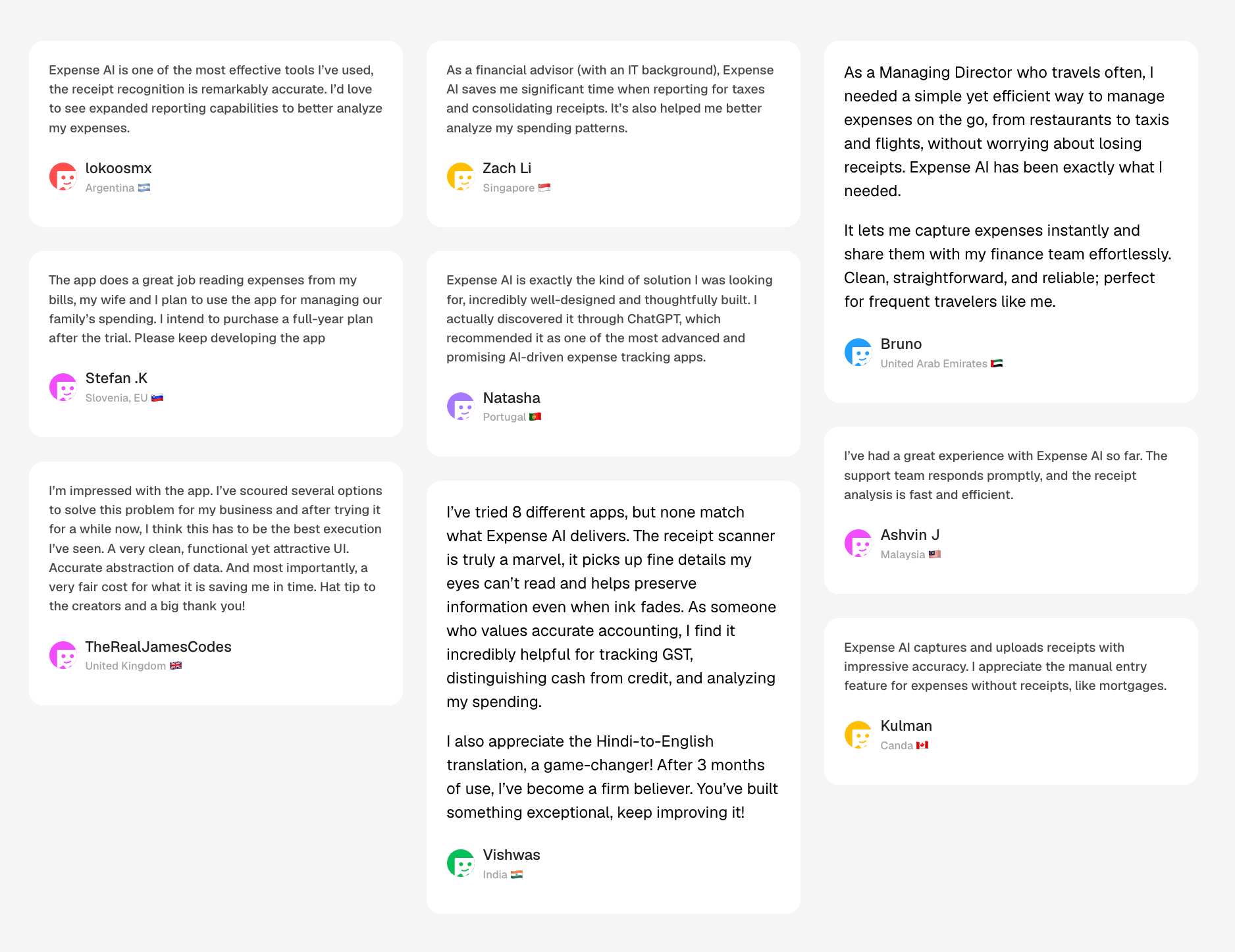
Tens of thousands of people have downloaded Expense AI across dozens of countries. Between them, they’ve logged tens of thousands of expenses, in nearly 100 currencies, from thousands of receipts and emails our system has read. All of it with zero marketing spend. Every single user arrived organically: someone told them about it, or they found it themselves while searching for a way to track their spending.
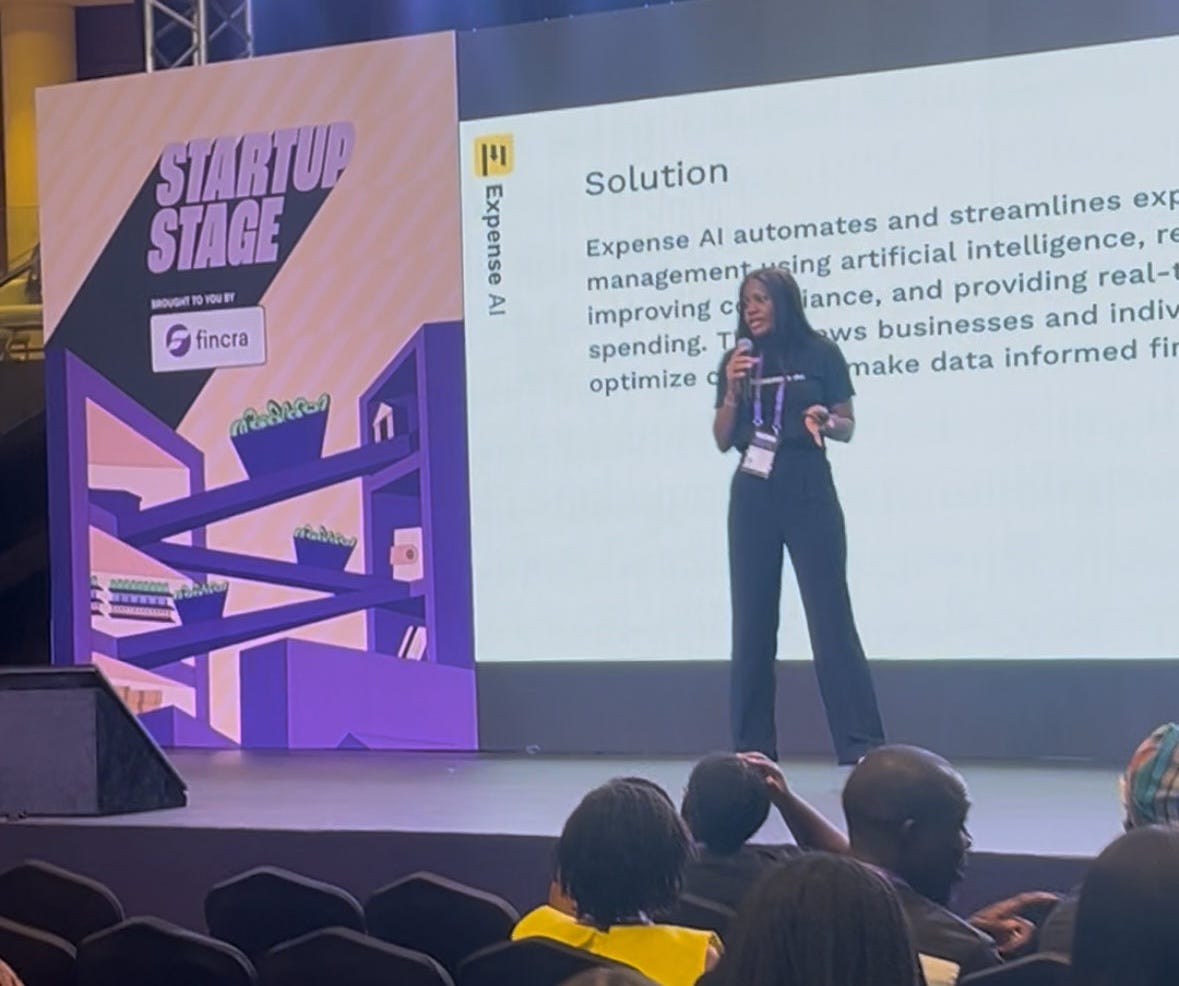
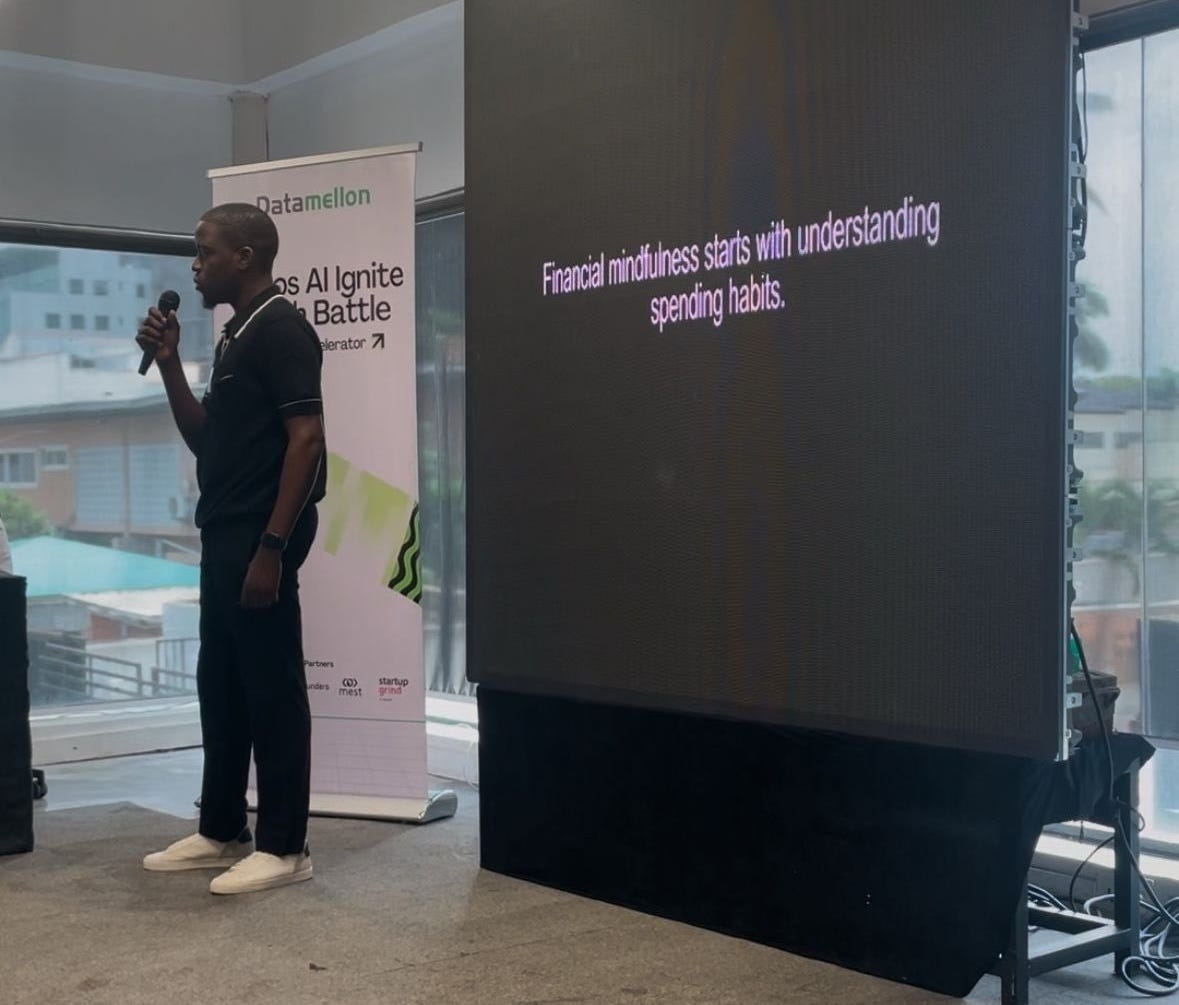
Along the way, we made the top 10 at the Moonshot Battlefield competition and qualified to pitch at Datamellon’s AI Ignite alongside a lineup of builders I deeply admire.
But the feedback that sticks with me most isn’t a milestone. It’s the users who describe Expense AI as “too easy to be true.” That’s the whole point. The work was supposed to disappear. When someone tells us it feels like it isn’t doing any work at all, that’s the work paying off.
Where we’re going
We’ve spent the last stretch rebuilding Expense AI almost from the ground up: a new look, a new experience, and a much clearer sense of what this thing is meant to be. There’s a lot I can’t wait to show you.
There’s also a bigger argument beneath all of this about why manual expense tracking is quietly dying and why the biggest players in tech are suddenly racing into personal finance. I’ll make that case properly next week. For now, I just wanted to introduce the thing itself and the road that led us here.
It’s been a long road from Trackfundx, but in every sense that matters, it still feels like day one.
If you want to see where your money actually goes, try Expense AI. And if you’d like to follow along as we build it in the open, subscribe, and I’ll be writing here every week.
— B. W. (Big Win? Balogun Wahab 👍🏼)